
Galaxy Buds On cost $229 in the US, but Europe won't get them until early 2027
Samsung's first open-ear clip-on earbuds reach the US in early November for $229. Europe has to wait until early 2027, and pricing is still unknown.

Samsung has confirmed US pricing and timing for the Galaxy Buds On, its first open-ear earbuds. They will cost $229 (before tax) and reach stores in early November, initially only in black. Outside the US, the small print in Samsung's announcement matters more: the earbuds won't be available in Europe until early 2027, and European prices have not been announced.
What "open-ear" actually means
Conventional wireless earbuds such as the Galaxy Buds4 Pro or AirPods Pro 3 seal the ear canal with a silicone tip. That helps the bass and makes active noise cancellation possible (ANC, where the earbuds use microphones to "erase" surrounding noise), but it also cuts you off from the world. The Buds On go the other way: each bud hooks onto the edge of the ear like a clip with a band, and the speaker sits just in front of the ear canal, which stays open. You hear your music, but also the car around the corner, a colleague, or the cyclist behind you.
Samsung says it developed the shape using more than 119 million ear data points, with simulations and AI-assisted optimization. Each bud weighs 6.65 g and the charging case 41 g. Controls are touch-based, and there are head gestures too: nod to accept a call, shake your head to decline. That option is switched off by default.
The specs at a glance
- Speaker: 11.3 mm TwinBoost, Snapdragon S7 Gen 1 Sound platform with a Class-D amplifier
- Battery life: up to 9.5 hours of music, up to 38 hours in total with the case; calls up to 5.5 hours, or up to 25 hours with the case
- Battery: 61 mAh per bud, 530 mAh in the case
- Connectivity: Bluetooth 6.2, SSC, SSC UHQ, AAC, SBC and LC3 codecs
- Durability: IP54 for the buds (dust and water splashes); the case is not water-resistant
- Calls: three microphones plus a VPU sensor that picks up your voice through bone vibration
- Compatibility: Android 12 or later with more than 1.5 GB of memory
The eternal problem with open-ear earbuds is sound leakage: if the music is loud enough, the person next to you on the bus hears it too. Samsung's answer is Audio Leakage Reduction, which is meant to steer the sound more toward your ear. How well that works in practice is something reviews will have to show. Auto Volume, which adjusts the volume to the ambient noise on its own, is labeled experimental (Labs) for now and requires One UI 8.5 or later.
They work best with a Galaxy phone
Officially, the earbuds work with any recent Android phone, but Samsung itself admits in the footnotes that some features won't be available on phones from other manufacturers. On a Galaxy phone you don't even need the Galaxy Wearable app: open the case, the buds connect, and volume and EQ live in the Quick Panel. Quick Voice Memo, triggered by a long press, requires a Galaxy AI device, Samsung's recorder app and Bixby. Gemini Live, Google's conversational assistant, wakes up with "Hey Google, let's talk live", which requires a Google account and that you be at least 18. Dismissing alarms and reading notifications with gestures requires One UI 9.0.
iPhone owners needn't bother: Samsung doesn't even list iOS among the requirements. There's no active noise cancellation, which is logical for an open design, and the spec sheet makes no mention of connecting to two devices at once (multipoint).
Price, Europe and cheap rivals
In the US the Buds On will cost $229, which is $20 less than the Galaxy Buds4 Pro ($249) and $50 more than the standard Galaxy Buds4 ($179). They are already on sale in South Korea. For Europe, Samsung only says "from early 2027", with no price and no list of countries. A straight dollar-to-euro conversion tells you little here, as US prices exclude tax while European ones include VAT. If Samsung sticks to its usual practice, they will probably cost more than €229 in Europe, but that is our estimate, not official information.
For comparison: on October 29 Xiaomi unveiled the Redmi Clip Neo in China, another clip-on design, for CNY 400 (roughly €54 at current exchange rates, excluding European taxes). They have 12 mm drivers, up to 7 hours of playback and multipoint, but for now they're sold only in China.
Our subjective take
Samsung is late to the open-ear category, but not unprepared: light buds, Bluetooth 6.2, LC3 and decent battery life are a solid foundation. The problem is the price. $229 for earbuds that by definition don't seal, have no ANC and don't mention multipoint in the spec sheet is a confident number. The Bose Ultra Open Earbuds launched at $299, while Chinese rivals are busy proving that an ear clip can be sold for pocket change. Samsung has picked a middle ground it will only justify if the sound genuinely surprises.
For Europeans the advice is simple: wait. By early 2027 the first proper reviews will be out, US prices will probably have dropped a few times, and we'll know whether Audio Leakage Reduction really protects your fellow bus passengers from your playlist. If you own an iPhone, the decision is even easier: these earbuds, along with the whole ecosystem, are meant for someone else.
This is the subjective view of The Pocket Brief editors.
Was this helpful?
Be the first to recommend this.
Keep reading

Xiaomi Clip goes global: clip-on earbuds, Find My for the case and 38 hours of battery
Xiaomi's first open clip-on earbuds have reached its global site six months after China: 5.5 g, LHDC 5.0 and Find My for the case. No price yet.
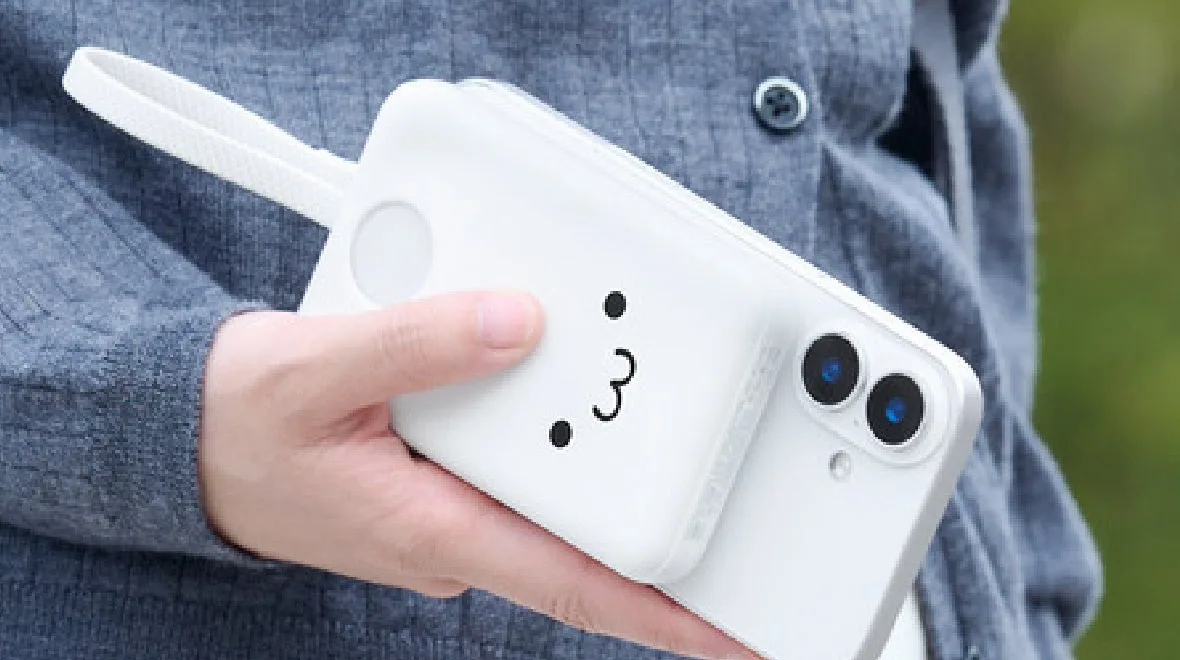
Elecom DE-C102: a semi-solid power bank promising 2,000 cycles, but only in Japan
Elecom's 10,000 mAh power bank has a gel electrolyte, 2,000 cycles and works down to −15 °C. It goes on sale in mid-November, but only in Japan.

Google Pixel Tag goes on sale in eight countries for $29.99
Google's Pixel Tag tracker costs $29.99 and went on sale in eight countries, including the US, on November 11. No EU country made the list.
